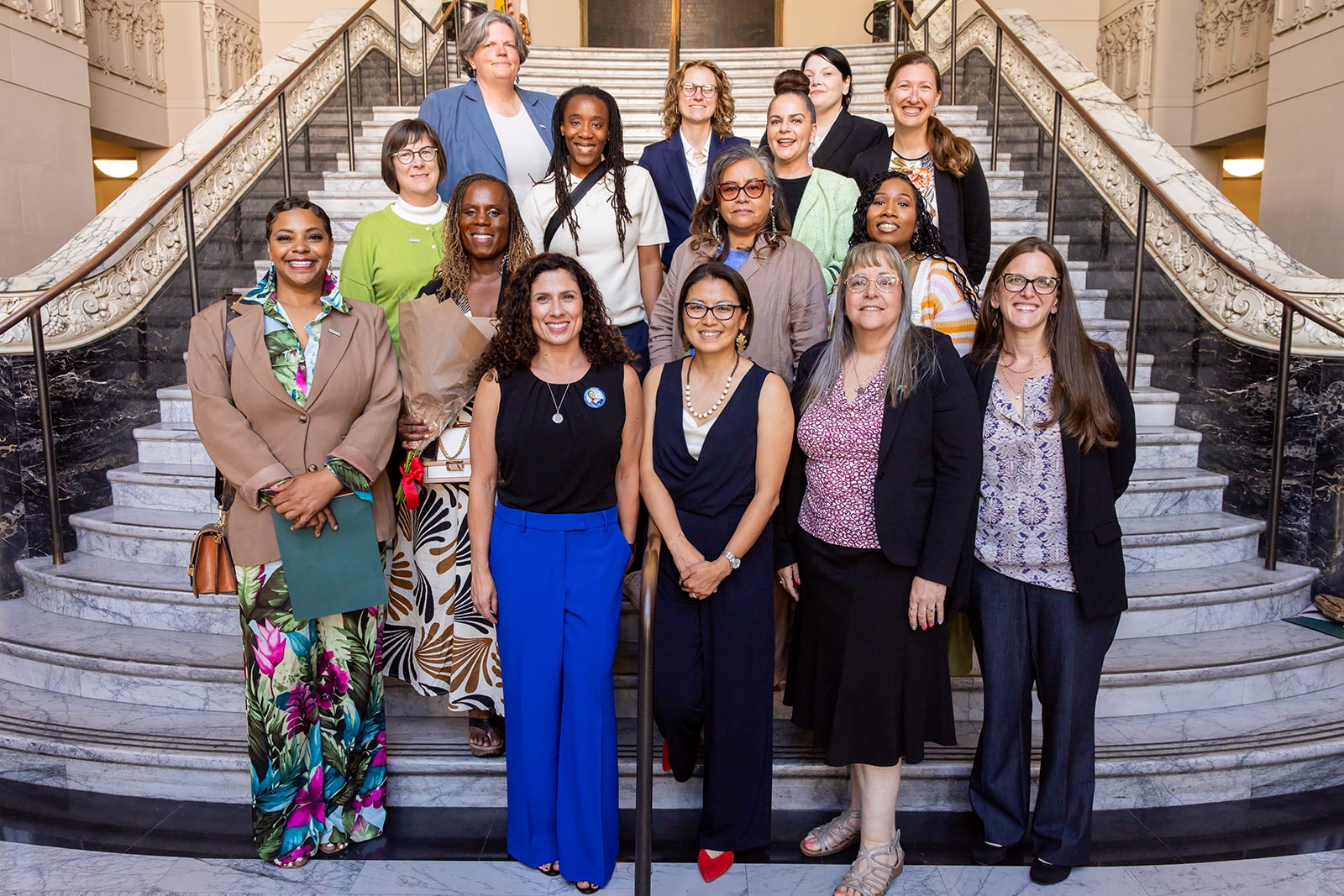
Felicia Bermudez brings a perspective rarely found on conference stages: she's lived the data that historians, politicians, and activist recite. As a marketing executive who navigated from underfunded public schools to 20+ years of leadership, she translates lived reality back into embodied analysis.

45-60 minute presentations for conferences, galas, summits, and large gatherings. Felicia delivers compelling narrative combined with data analysis, customized to your audience and organizational mission.
90-minute to half-day sessions for organizations wanting to go deeper. Interactive format includes presentation, facilitated discussion, and practical application to participants' contexts.
Felicia serves as panelist or moderator for discussions on economic mobility, education equity, tech diversity, policy impact, or systemic barriers.
Custom engagements for companies seeking to understand how structural barriers affect their diversity initiatives, plus strategic guidance on interventions that actually work.
Conversational format for intimate settings, book festivals, podcast recordings, or media events.
Lectures, seminars, and student engagement for academic audiences. Available for course guest lectures, first-generation student programs, and research collaborations.

The Challenge: America promises that hard work and talent determine success, but children's futures are largely decided by the neighborhood they're born into. School funding tied to property taxes creates divergent realities for kids living blocks apart—and most people have no idea how this mechanism actually works or why it exists.
What Felicia Reveals: Drawing from her childhood experience of memorizing a fake address to access a better school, Felicia exposes the systematic mechanism by which geography becomes destiny. She walks audiences through specific policy decisions—from California's Proposition 13 to similar measures across 30+ states—showing exactly how these choices created the widening inequality we see today. She doesn't just cite that California dropped from 5th to 47th in per-pupil spending; she makes audiences understand what 47th place looks like, smells like, feels like in an overcrowded classroom with duct-taped textbooks.
The Impact:Audiences leave understanding that zip code inequality isn't accidental—it's designed through policy choices we can reverse. Felicia presents the data showing how equitable funding produces measurable outcomes, the return on investment for early interventions, and what genuine opportunity would look like without requiring extraordinary individual circumstances.

The Challenge: Sixty-eight percent of Division I college athletes report food insecurity. Latinas hold 2% of tech leadership roles. Most organizations treat these as separate issues requiring separate solutions—mentorship programs, pipeline initiatives, unconscious bias training. None of it moves the needle significantly because they're addressing symptoms, not root causes.
What Felicia Reveals:These aren't different problems—they're the same structural barriers at different life stages. Felicia competed in NCAA Division I rowing while qualifying for free lunch, then spent 20 years navigating tech as one of that 2%. She shows exactly how barriers compound: childhood nutrition affects athletic performance, educational resources affect college preparedness, network access affects career trajectory, and accumulated disadvantages become "diversity problems" that individual interventions can't solve.
She doesn't let corporate audiences off easy. With insider credibility from two decades of executive leadership, she demonstrates why diversity initiatives fail: you can't solve 40 years of systematic disinvestment with a mentorship program. The "pipeline problem" is a policy problem decades in the making, and real solutions require understanding—and addressing—root structural causes.
The Impact: Audiences stop treating diversity as HR problem to solve with training modules and start recognizing it as accumulated outcome of structural forces. Corporate leaders gain framework for understanding why talented people from certain backgrounds remain underrepresented despite stated commitments to inclusion. Organizations learn what actually works versus what makes them feel like they're trying.

The Challenge: Conversations about social programs typically frame support as moral imperative or charitable obligation, which allows fiscal conservatives to position equity as unaffordable luxury. Meanwhile, we're spending trillions on systems producing poor outcomes while claiming we lack resources for interventions with documented returns.
What Felicia Reveals: Felicia makes the business case for equity with hard ROI data. Early childhood programs return $7-12 for every dollar invested. School meal programs generate $2 in benefits per dollar spent. We currently spend $4.26 trillion on systems that perpetuate inequality while claiming we can't afford $19 billion to adequately feed students. She presents this not as opinion but as documented economic analysis—then connects the numbers to lived experience, showing exactly what those returns look like in actual human development.
Drawing from her own trajectory—catching temporary policy investments in the 1990s that enabled college access, then watching purchasing power collapse for subsequent students—she demonstrates what we gain from smart investment and what we lose from short-sighted cuts. She survived childhood malnutrition from 1980s budget cuts that still affect her adult immune system decades later. Those cuts weren't fiscal responsibility; they were wealth transfers disguised as budget constraints.
The Impact: Audiences receive permission to make the economic argument for equity. Fiscal conservatives gain data showing these programs pay for themselves. Progressive audiences gain confidence to lead with returns rather than appeals to compassion. Organizations learn to articulate social missions in economic terms that resonate across political divides.
We use cookies to analyze website traffic and optimize your website experience. By accepting our use of cookies, your data will be aggregated with all other user data.